Louis Vuitton finds a new canvas for its savoir-faire: the Porsche 911


When a car becomes a luxury object
Louis Vuitton has found a new canvas on which to express some of the codes that have defined its identity for more than 170 years: the Porsche 911. The French maison and Singer, the California-based specialist renowned for reimagining classic Porsche 911s, unveiled an extraordinary collaboration during Monterey Car Week involving two cars, a coupé and a cabriolet, that take personalisation far beyond the conventional configuration of a high-end automobile. The project began relatively simply, when Singer approached Louis Vuitton to create a dashboard clock, but evolved into something much broader, bringing together leather craftsmanship, upholstery, luggage, watchmaking references, materials and decorative techniques associated with the French house. The result should not merely be understood as a collaboration between two celebrated names, but as a demonstration of how far a luxury brand can extend when its creative language is powerful enough to function beyond its original category.
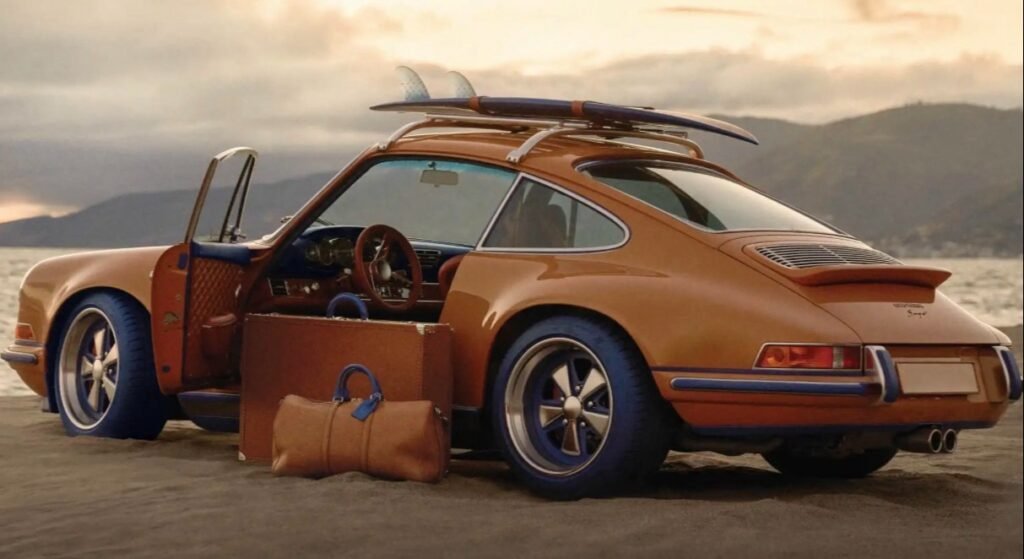
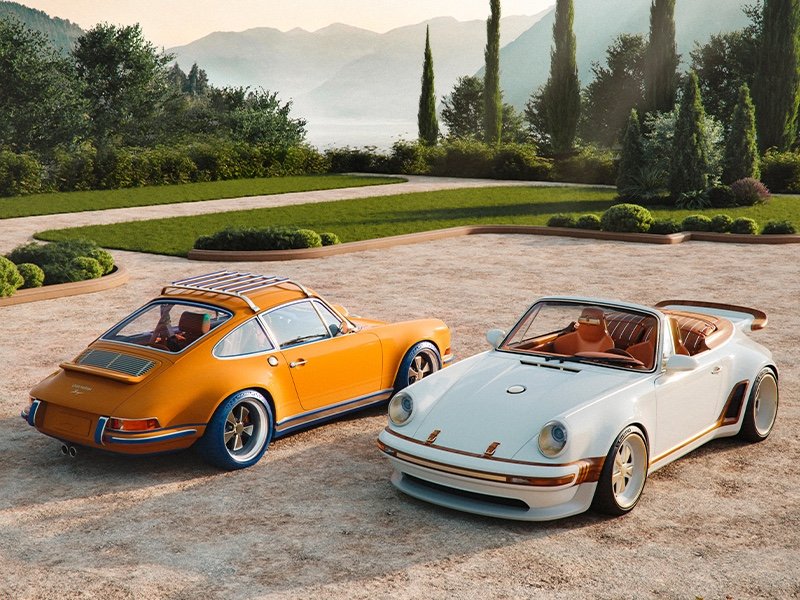
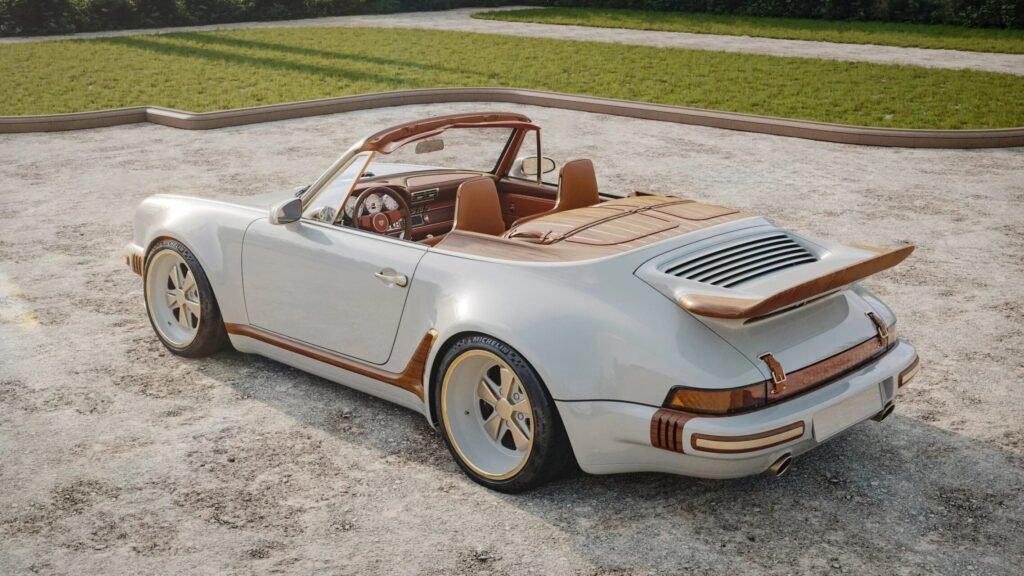
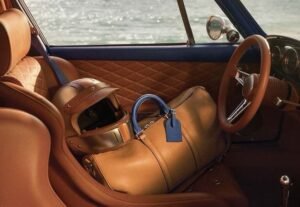
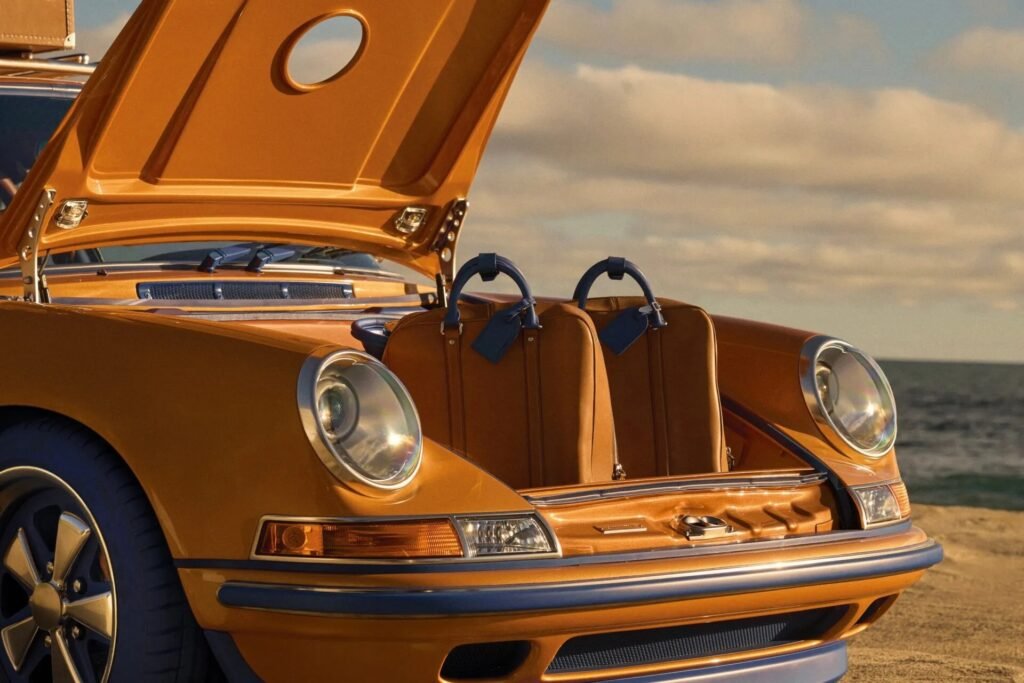
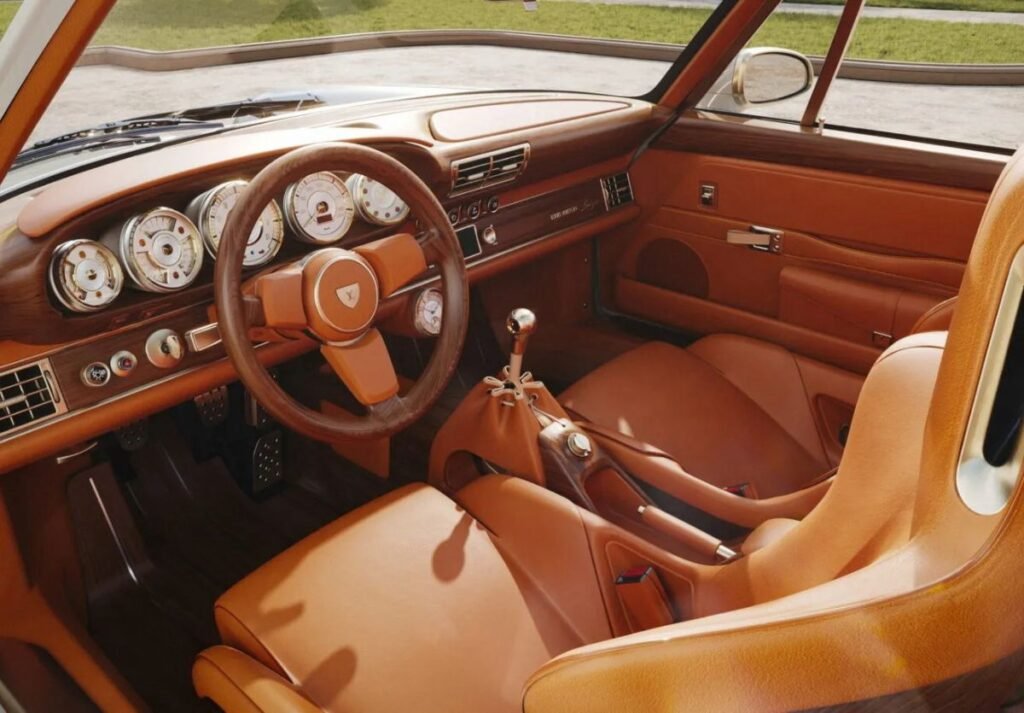
The cars retain Singer’s philosophy of using the Porsche 911 as the foundation for an exceptionally refined machine in terms of engineering, materials and execution. Louis Vuitton introduces elements from its own universe onto that platform. The coupé incorporates references to the Monogram Flower and the distinctive malletage pattern historically associated with the padded interiors of the maison’s trunks. The cabriolet includes other details deliberately connecting the vehicle with Louis Vuitton’s historic products, while bespoke luggage becomes an integral part of the project. This revives a relationship between motoring and luggage that has deep roots in the history of luxury: before becoming one of the world’s largest fashion houses, Louis Vuitton built much of its reputation by creating trunks and travel solutions for an elite discovering the possibilities of trains, ocean liners and automobiles.
The automobile is opening a new territory for luxury maisons
The collaboration is particularly interesting because it demonstrates how traditional boundaries between categories are disappearing. For decades, a fashion house primarily sold fashion, a watchmaker produced watches and an automotive company built cars. Contemporary luxury operates differently. Major brands no longer compete solely within individual categories; they compete to occupy a greater share of the cultural and emotional universe of their most valuable customers. Louis Vuitton can sell a handbag, high jewellery, a watch, fragrance, a trunk, furniture or a hospitality experience and can now apply its craftsmanship and visual codes to a collectible automobile.
The economic logic is particularly powerful within the ultra-high-net-worth segment. The potential owner of a seven-figure Singer is likely to already possess several automobiles, watches, artworks and luxury products. Such a customer is not purchasing purely for functionality or performance. They are looking for objects that are difficult to replicate, carry a recognisable story and express personal identity. The involvement of a maison such as Louis Vuitton adds another layer of rarity to the automobile, allowing two collecting cultures — fashion and automotive — to converge within a single object.
A return to Louis Vuitton’s travelling origins
There is also considerable historical coherence behind the project. Louis Vuitton was founded in 1854 as a specialist in luggage and travel, rather than as a fashion house in the contemporary sense. Its trunks were designed to accompany a new international class of travellers using the most advanced forms of transportation of their era. The automobile subsequently became a natural extension of this universe, and during the early decades of the twentieth century leading luggage houses developed trunks and cases specifically designed for their clients’ cars.
The Singer collaboration can therefore be interpreted as an update of that tradition. The automobile once again becomes a platform for Louis Vuitton savoir-faire, but this time within a completely different market: highly personalised, reimagined classic Porsche 911s, where engineering, nostalgia, design and collecting converge.
This allows the maison to connect heritage with contemporary luxury without artificially inventing a new narrative. The relationship with motoring was, in many respects, already embedded in Louis Vuitton’s historic relationship with travel.
Monterey is the perfect stage for this new luxury economy
The choice of Monterey Car Week is equally deliberate. For several days every summer, the Monterey Peninsula becomes one of the world’s greatest concentrations of collectors and private wealth. Pebble Beach Concours d’Elegance, The Quail, major international auctions and numerous private events bring together historic automobiles, supercars, high watchmaking, fashion, gastronomy, private aviation and hospitality.
The ecosystem perfectly illustrates how consumption at the highest level of luxury is evolving. A client can attend the unveiling of an automobile in the morning, discover a limited watch in the afternoon, join a private dinner hosted by a maison that evening and bid on a multimillion-dollar historic car the following day. Categories cease to operate independently because the customer is ultimately the same.
For Louis Vuitton, entering this ecosystem provides direct access to an exceptionally attractive audience without requiring the company to establish an entirely new industrial category. The maison contributes design, materials, craftsmanship and intellectual property; Singer contributes engineering, Porsche culture and credibility among collectors. Each company preserves its specialisation while increasing the perceived value of the final object.
Savoir-faire can become a growth platform
The business implications extend far beyond these two Porsche 911s. The major maisons possess an asset that for decades was primarily used to manufacture their own products: savoir-faire. Expertise in leather, embroidery, metal, wood, glass, ceramics, textiles and personalisation can increasingly be applied to entirely new territories.
This creates enormous possibilities. Automotive interiors, yachts, private jets, residences, hotels, restaurants and furniture can all become surfaces on which a maison projects its universe without necessarily manufacturing the underlying asset itself. Luxury can therefore evolve from selling products towards the monetisation of cultural codes, creativity and artisanal knowledge.
There is, of course, a risk of overextension. If a brand appears across too many categories or collaborations, it can dilute the very qualities that make it exceptional. The challenge will be to select projects where there is genuine coherence between heritage, customer and execution. In this case, Louis Vuitton’s historic relationship with travel and the collectible nature of the Porsche 911 provide an unusually strong connection.
The future of ultra-luxury will be increasingly transversal
Louis Vuitton and Singer anticipate an industry in which the boundaries between fashion, automotive, watchmaking, art, hospitality and design will matter increasingly less. For the wealthiest consumers, all these categories belong to the same lifestyle and compete for the same scarce resources: attention, time and discretionary spending.
The opportunity for luxury brands will be to ensure that their codes are powerful enough to travel between categories without losing authenticity. Louis Vuitton can do this because its Monogram, its travel heritage, its leather craftsmanship and its savoir-faire remain recognisable even when the handbag disappears.
That could become one of luxury’s most important competitive assets towards 2030: a brand capable of transforming its identity into a platform rather than merely a collection of products.
The Porsche 911 reimagined by Singer and Louis Vuitton represents precisely that evolution. It is no longer simply about driving an exceptional automobile. It is about owning an object in which engineering, design, heritage, craftsmanship and culture converge within something exceptionally difficult to reproduce.
Prepare to lead the new luxury industry
The collaboration between Louis Vuitton and Singer demonstrates how leading luxury brands are expanding their business models into automotive, hospitality, design, experiences and new forms of personalisation.
The MBA in Luxury Management at LUXONOMY University is designed for professionals who want to understand and lead this transformation, developing expertise in strategy, marketing, innovation, retail, hospitality, artificial intelligence, consumer behaviour and the international management of luxury brands.
Recognised as the leading online MBA in Luxury Management by U.S. News and delivered by an institution whose degrees are accredited through SACSCOC, the programme provides a global perspective on the new business models shaping the future of the industry.
Discover the MBA in Luxury Management at LUXONOMY University
Discover more from LUXONOMY
Subscribe to get the latest posts sent to your email.