Milan Fashion Week Drives a Creative Reconfiguration of the Global Luxury Sector

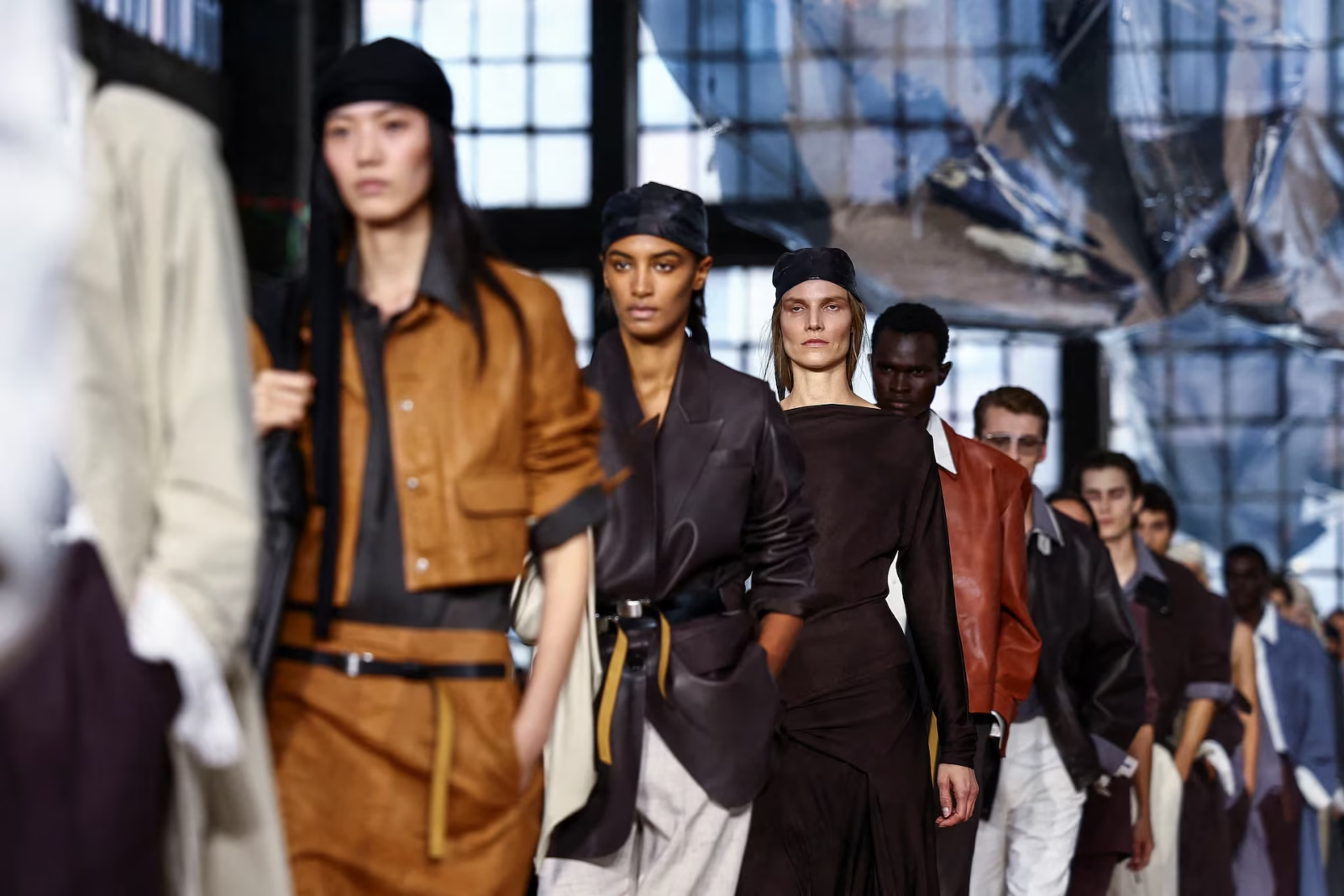

The latest edition of Milan Fashion Week was far more than a sequence of runway presentations; it functioned as a strategic laboratory for the creative repositioning of the global luxury industry. At a time marked by selective market slowdowns, evolving consumer behavior, and heightened expectations around brand authenticity, Milan’s leading houses responded with bold aesthetic recalibrations, renewed emphasis on craftsmanship, and a deeper integration of digital strategy.
Milan has long represented the intersection of industrial precision and artistic sophistication. This season reaffirmed that luxury does not reinvent itself by erasing its heritage, but by reinterpreting it with cultural intelligence. Three structural themes dominated the runways: a return to tangible craftsmanship as a symbol of value, a refined interpretation of contemporary elegance, and the increasing role of technology in brand architecture.
New Creative Directions, Renewed Brand DNA
One of the central narratives of the week was leadership transition within major houses. The first collections under new artistic direction at Gucci signaled a shift toward sharper tailoring, controlled sensuality, and visual coherence, moving away from recent maximalist excess. The strategic message was unmistakable: mature sophistication and long-term identity building over short-term spectacle.
At Fendi, the dialogue between Roman heritage and contemporary engineering was further refined. Architectural silhouettes and experimental textiles paid homage to the brand’s legacy while projecting a forward-facing narrative. Archival reinterpretation has become a strategic instrument to connect multiple generations of clients.
Meanwhile, Prada deepened its intellectual exploration of power, femininity, and minimalism. The brand’s aesthetic continues to balance conceptual rigor with disruptive detail, positioning itself as a cultural rather than purely commercial force within the luxury ecosystem.
Craftsmanship and Global Mindset
Luxury can no longer rely solely on aspirational consumption. The modern client is informed, culturally aware, and cross-generational. Milan’s collections reflected a renewed focus on intrinsic product value: impeccable tailoring, noble materials, traceability, and controlled production volumes.
“Made in Italy” reemerged not as a slogan but as a structural advantage. Supply chain excellence, artisanal expertise, and textile innovation form part of the narrative that justifies premium positioning in an increasingly competitive environment.
At the same time, collections demonstrated global adaptability. Key markets such as Asia, the Middle East, and the United States remain strategic pillars, yet the creative language must travel seamlessly. Versatility, functional luxury, and transitional pieces that move from professional settings to social environments define the new wardrobe architecture.
Digital Amplification and Data Intelligence
Beyond the physical runway, Milan Fashion Week unfolded as a hybrid experience. Immersive streaming, curated digital communities, and targeted social media activations extended reach far beyond the show venue. The runway no longer ends with the final walk; it continues through global conversation.
Luxury houses are increasingly leveraging data analytics to measure audience response in real time, refine communication strategies, and anticipate demand curves. Creative intuition now operates alongside market intelligence, producing a more balanced ecosystem between artistry and strategy.
Repositioning for a New Economic Cycle
Following years of accelerated growth, the sector is entering a phase of recalibration. Milan’s response was clear: value over volume. Reduced saturation, stronger identity, and elevated exclusivity are becoming central strategic priorities.
Coherent collections and disciplined brand narratives suggest the emergence of a more reflective luxury cycle. Differentiation will be the decisive factor. The brands capable of integrating heritage, innovation, and cultural relevance will shape the next era of global luxury.
Milan as a Strategic Barometer
Once again, Milan positioned itself not merely as a fashion capital, but as a barometer for the industry’s direction. The creative recalibration witnessed this season points toward a more structured, culturally conscious, and strategically disciplined luxury landscape.
Milan Fashion Week has demonstrated that creativity is not decorative in luxury; it is foundational. In a world undergoing structural transformation, Milan has sent a clear signal: the future of luxury will be defined by those who understand that artistic vision and strategic precision are inseparable.
Discover more from LUXONOMY
Subscribe to get the latest posts sent to your email.